

You were just trying to clean things up. Maybe freshen the siding, prep for a new coat of paint, or get the deck looking like less of a mossy science experiment. But then—bam. You spot it. Mushy siding. A weird spot that gives when you press it. Maybe even a piece that flakes off like a croissant.
Congratulations! You may have just discovered wood rot.
Don’t panic. It’s not the end of the world, or even the end of your weekend plans. But it is something to take seriously. Let’s walk through what’s going on, what you need to know about wood rot repair, and how to avoid this rot drama in the future.
First Things First: Power Washing Didn’t Cause the Rot
Let’s clear this up right away. If you think your power washer somehow single-handedly destroyed your siding, it probably didn’t. (Unless you cranked it to “destroy mode” and aimed it like a laser cannon.)
What likely happened is that your power washer removed the dirt and paint that were hiding the rot underneath. Wood rot is a sneaky little fungus that thrives when wood stays damp for too long—often from clogged gutters, poor drainage, or bad caulking around windows and trim.
So no, your power washer isn’t the villain here. In fact, it might have done you a favor by revealing the issue before it got worse.
Is Your Wood Rot a Big Deal? Here’s How to Tell
Not all rot is created equal. Some soft spots might be just on the surface; a little cosmetic damage that’s easy to sand, patch, and paint. Other times, it’s the tip of the squishy iceberg.
Here are a few signs you’ve got real trouble:
Wood feels spongy or crumbles when pressed
You smell a damp, musty odor
Paint is bubbling or peeling in weird patterns
The area feels soft even under the surface layer
Trim, fascia, or siding seems warped or pulling away
If you’ve got more than one of these, it’s time to dig deeper, literally and figuratively.

Can I Just Paint or Stain Over Wood Rot? (Please Say Yes)
We hate to be the bearers of boring, responsible advice… but no, you really shouldn’t.
Painting or staining over wood rot is like putting deodorant on a skunk. It might smell better for a second, but the underlying problem is still there—and it’s only going to get worse.
Rotten wood doesn’t hold paint well. Even if it looks okay right after painting, the moisture content in the wood will cause blistering, peeling, and even more rot down the road.
Moral of the story: don’t cover it up. Fix it up.
Okay, So What Do I Actually Do To Repair Wood Rot?
Glad you asked. Here’s your post-power-wash playbook:
- Identify the extent of the rot: Tap around with a screwdriver. If it sinks in easily, that wood’s not long for this world.
- Stop the moisture source: Check for leaking gutters, bad seals, or areas where water tends to pool.
- Decide: Repair or replace? Small areas can often be cut out and patched with epoxy or filler. Larger or structural damage will likely need full board or trim replacement.
- Consider calling a pro: Especially if the rot is near windows, doors, or the foundation. That’s not a spot you want to guess wrong on.
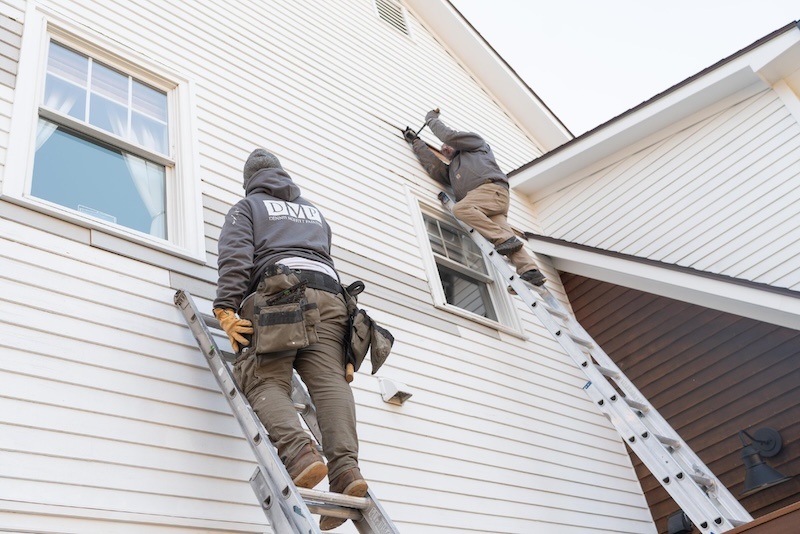
How to Keep Wood Rot From Happening in Rhode Island
Here’s the good news: preventing wood rot is way easier than fixing it. A few smart habits can make a big difference—like cleaning your gutters (yes, again), resealing caulk around windows and doors, and keeping up with regular painting or staining. Don’t forget to keep bushes and vines trimmed back from your siding—they trap moisture like it’s their job.
And when it’s time to power wash, use the right nozzle (25–40 degrees is your friend), keep a safe distance, and avoid blasting water directly into seams or joints. You’re aiming for “clean and refreshed,” not “oops, structural damage.”
What If I Ignore It?
Well… we don’t recommend that. Left untreated, wood rot will spread. It can weaken structural components, attract pests, and turn a $200 repair into a $2,000 headache.
Also, if you’re thinking of painting your house soon, a home inspector (or a picky buyer) will notice that rot. They always do. It’s like their sixth sense.
Need Wood Rot Repair Services in Wakefield Rhode Island?
Wood rot might feel like a curveball, but it’s a fixable one. Power washing didn’t cause the problem—it just handed you the flashlight to see it. Now it’s your move.
Take action early, keep your home’s exterior dry and sealed, and if things get beyond DIY territory, call in someone who knows their fascia from their flashing.
You’ve got this. Just maybe put the power washer down for a sec first.
Not sure if it’s a small patch or a full repair? Call Dennis Moffitt Painting. We’ll spot the rot and set it right!
